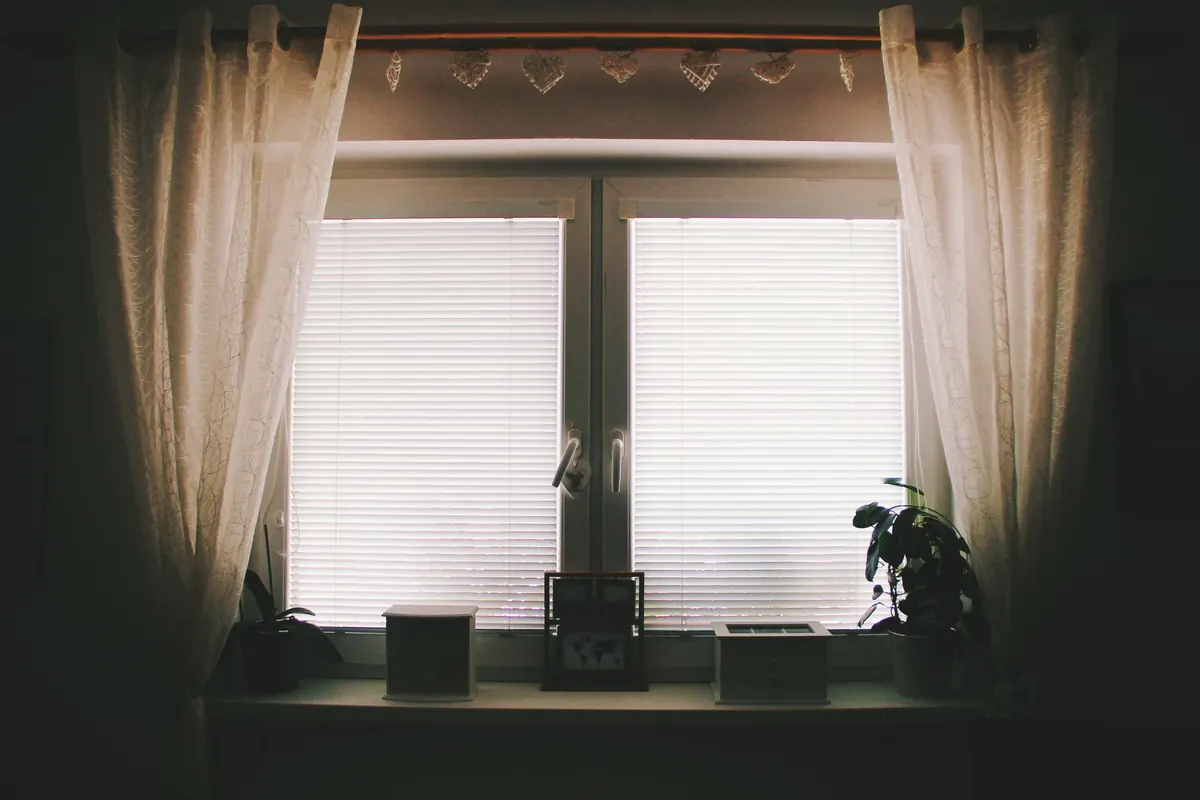



Layering Curtains with Blinds: A Beginner's Guide to Window Treatments
A window with one layer on it is doing half a job. A blind on its own filters light neatly but can look a little bare at the edges, especially in a room with high ceilings or a wide span of glass. Curtains on their own are warm and generous, but they leave you squinting at a bright screen at four in the afternoon. Put the two together and something clicks: you get precise control over daylight, a softer edge to the room, and that settled, finished look that is hard to fake with a single window covering.
Layering is not complicated, but the order of work matters. Get the mounting and the measurements right and everything else falls into place.
Why Two Layers Beat One
Think about how you actually use a window through the day. In the morning you want light without being stared at from the street, which is exactly what a tilted Venetian blind or a half-raised roller does well. In the evening you want privacy and warmth, and that is the curtain's job. Two layers let you answer both needs without compromise.
There is a practical benefit too. A blind sitting close to the glass creates a pocket of still air, and a curtain drawn in front of it adds another. In winter that buffer makes a noticeable difference in a room with older glazing, and in summer a light-coloured blind bounced back into the room keeps things cooler than glass alone. Add the acoustic softness of fabric and the whole room feels calmer.
Then there is the visual side. Curtains frame a window; blinds finish it. The combination reads as considered rather than improvised, and it hides the small imperfections — an uneven reveal, a slightly off-centre sill — that a single flat blind tends to highlight.
Measure First, Then Decide What Goes Where
The most common mistake is buying the blind before checking how much room the curtain hardware needs. Work in this order and you will avoid drilling twice.
- Measure the recess — width, drop and, crucially, depth. A roller needs only a few centimetres of clearance; a Venetian blind with wooden slats needs considerably more.
- Choose the blind and note its headrail position, whether it sits inside the recess or on the face of the wall.
- Mark the curtain pole roughly 10–15 cm above the top of the window, or higher if you want the room to feel taller. Extend it 15–20 cm past the frame on each side so the open curtains clear the glass.
- Check for collisions. The blind's brackets and the pole's brackets should not share the same patch of wall or ceiling.
- Fit the blind first, the pole second. It is far easier to work around a slim headrail than around a pole and its finials.
Roller Blinds and Curtains: The Clean Pairing
Rollers are the easiest blind to layer because they take up almost no room. Mounted inside the recess, the fabric rolls away into a compact tube at the top and the window is genuinely clear. That makes them the right choice when there is limited space between the window head and the ceiling, or when a structural beam rules out anything deeper.
The pairing works best with a clear division of labour. In a bedroom, a blackout roller behind lined curtains gives you darkness on summer evenings and insulation in winter. In a living room, a light-filtering roller or a sheer one softens harsh afternoon sun while the curtains stay pulled back and decorative. If you want a little theatre, raise the roller to two-thirds and let the light fall in a soft band while the curtains frame it.
Clearance detail
Measure the roller's tube and brackets, then add a couple of centimetres before you fix the pole. A pole that sits too close to the headrail will foul it every time you pull the cord.
Roman Blinds: Softness on Softness
Roman blinds are the most natural partner for curtains because they are made of the same material language. When raised, they stack into horizontal folds at the top of the window; when lowered, they present a clean panel of fabric. That folded stack is the detail to plan around. It can occupy a fifth to a quarter of the blind's drop, depending on how many folds the maker has built in, so your pole needs to sit above the stack rather than through it.
For a coordinated look, use the same fabric for both and let the blind do the pattern while the curtains are a plain, heavier version of the same colour — or the reverse. Avoid putting a busy print on both; the eye needs somewhere to rest. Roman blinds also work well mounted outside the recess across the full width of the window wall, with the curtains hung wide to either side, which makes a small room look more generous.
Venetian Blinds: Directing the Light
Venetians are the most adjustable of the three. Tilting the slats changes the angle of the light rather than simply blocking it, so you can keep a view of the garden while cutting glare off a television screen. That flexibility is worth having in a home office, a kitchen or any room you use in several different ways during the day.
Because slats are visually busy, keep the curtain side of the arrangement calm. Flat panels in linen, cotton or a simple wool mix, with a straightforward heading, look better here than anything gathered, swagged or heavily trimmed. Wider slats in wood or a warm-toned finish sit comfortably with natural fabrics; slim metal slats suit crisper, more tailored rooms. Remember that a raised Venetian gathers its slats into a bundle at the top — measure that bundle, not just the headrail.
Details That Make the Layering Look Deliberate
- Let the pole run wide. Curtains need somewhere to go when they are open. Allow roughly 20–30% extra width beyond the glass so the panels stack clear of the window rather than covering it.
- Choose one focal point. Pattern on the blind, texture on the curtains. Or the other way round. Never both competing.
- Line the curtains. A lining improves the drape, protects the fabric from sun, and stops the curtain reading as a flat sheet of colour.
- Set the hem with the blind in mind. If the blind finishes at the sill, floor-length curtains look elegant. If the blind drops below the sill, keep the curtains just off the floor.
- Mind the gap. The sliver of wall visible between the blind's edge and the curtain's leading edge should be intentional — either hidden completely or clearly framed.
- Deal with the cords. Choose cordless or tensioned options where you can, and keep any looped cords well out of reach of children and pets. This is a genuine safety point, not a styling one.
A Simple Order of Work
Decide the blind type first, because it dictates everything else. Measure the recess and the wall above it, mark both the blind and pole positions on the wall in pencil, and stand back to check the proportions before you drill. Fit the blind, fit the pole, then hang the curtains and leave them for a week before you commit to a hem — fabric drops and settles, and a length that looked right on day one often needs a small adjustment by day seven.
Live with the arrangement through a full day before you call it finished. Notice where the light falls at nine in the morning and whether the curtain stack blocks the radiator or the sofa. Most adjustments are small — a bracket moved two centimetres, a cord shortened — but they are the difference between two window coverings and a window treatment that works.