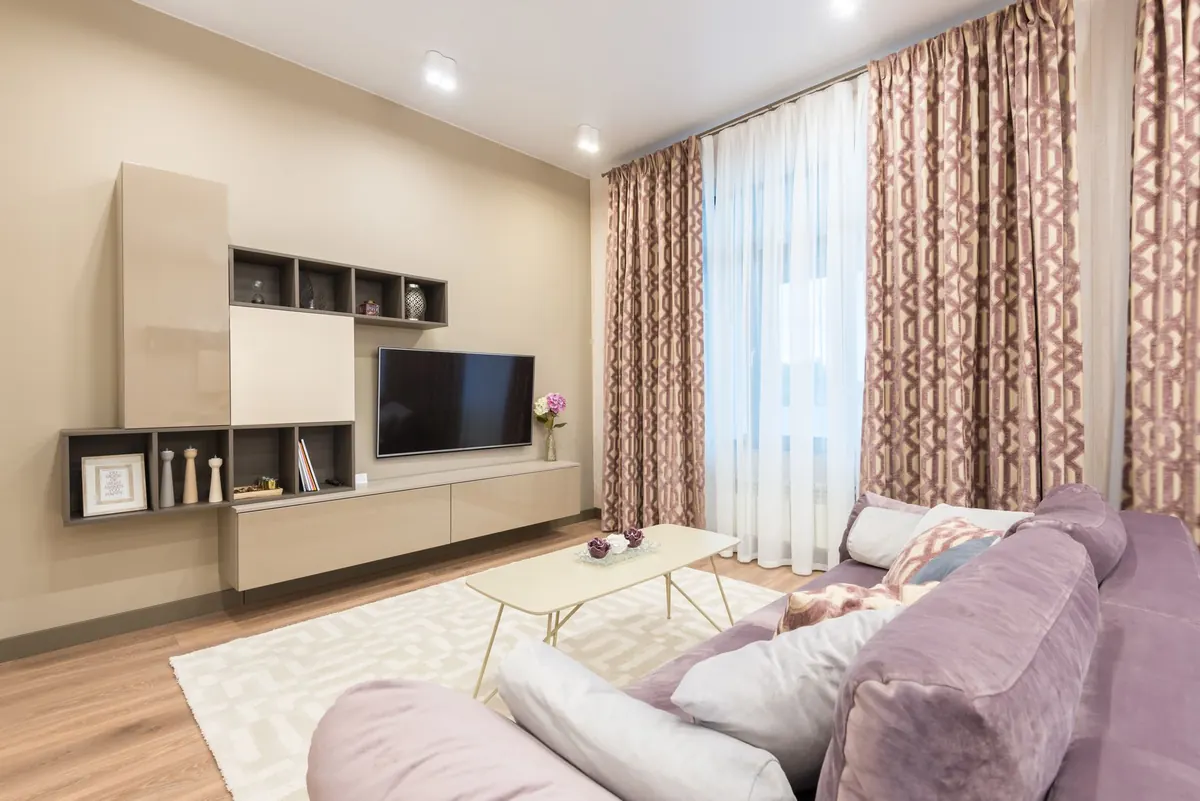
How to Choose Curtains for Small Rooms Without Making Them Feel Closed In
Curtains are usually the last thing chosen for a small room and the first thing blamed when it feels tight. The truth is less dramatic than that. A compact room rarely feels closed in because of the curtains themselves, but because of where they hang, how much wall they eat, and how much light they let through. Get those three things right and the fabric almost disappears into the job it is doing. Get them wrong and even a pale linen panel can make a window look like a sealed doorway.
Work through the decisions in order, from the rod down to the hem. Each one limits the next.
Let the Rod Sit Higher and Wider Than Feels Normal
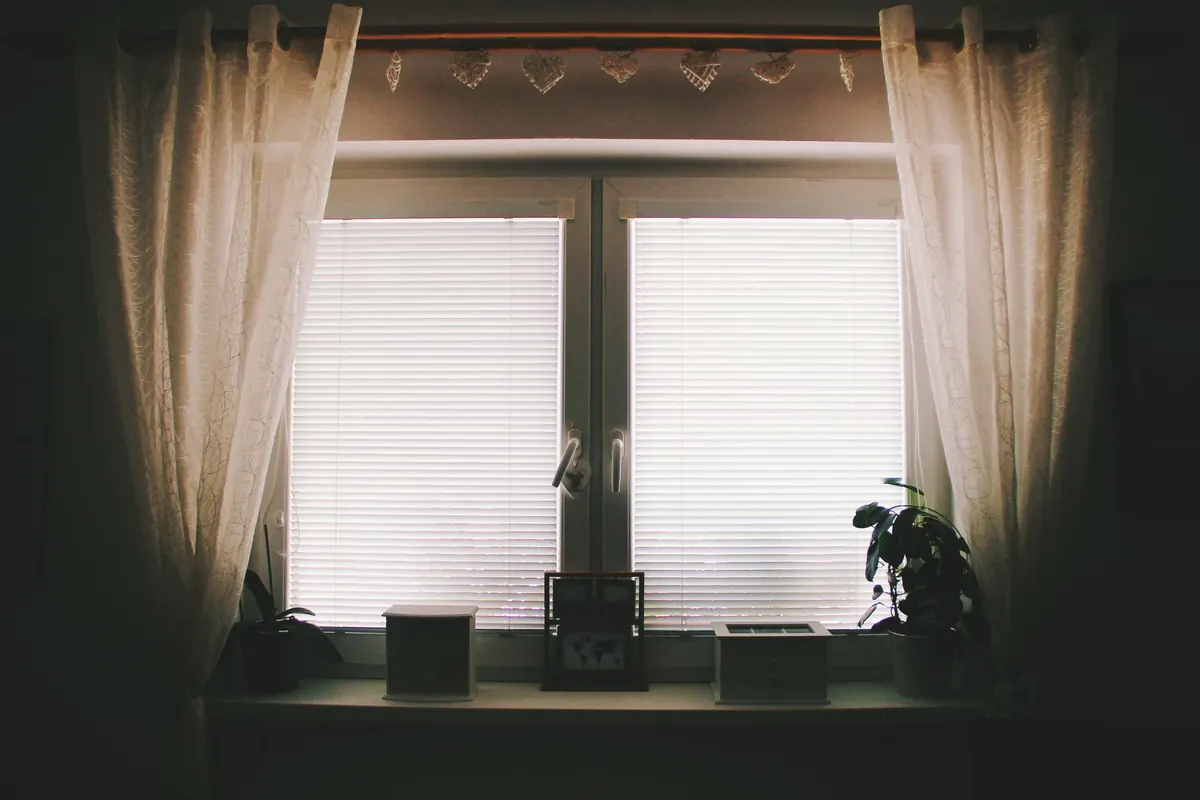
Most small rooms have windows with a generous band of wall above them, and that band is the most useful space in the room. A rod fixed a few centimetres above the frame chops the wall into a narrow strip and makes the ceiling feel lower than it is. Instead, take the rod as close to the ceiling line as the brackets allow, or fix a track directly to the ceiling. The extra height pulls the eye upward and makes the window read larger than its measurements.
Width matters just as much. Extend the rod 20 to 30 centimetres beyond the frame on each side, so the open panels hang over wall rather than over glass. In a narrow room, running the rod almost wall to wall is often the best solution: the curtains become part of the architecture instead of an interruption. Order panels at roughly twice the rod width, or two and a half times for sheers. Too little fabric looks stiff and mean; too much crowds the wall when the curtains are drawn back.
Keep the hardware quiet. Slim rods, brackets that sit close to the wall, and small finials take up less visual space than thick decorative poles. If the window has a deep sill or a radiator beneath it, check the rod's projection before ordering, so the fabric clears both instead of draping over them.
Match Fabric Weight to the Light You Actually Have
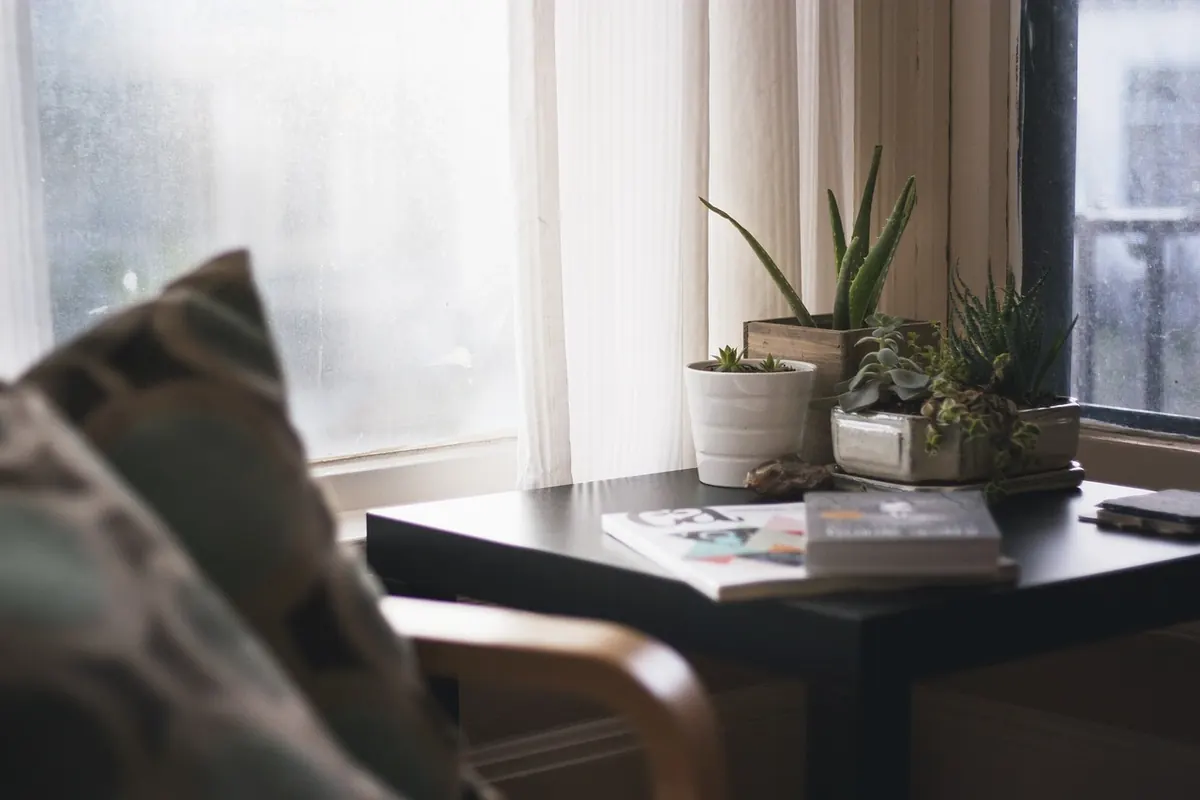
Heavy fabric is the most common mistake in a small room. An interlined wool or a dense velvet looks substantial in a large drawing room and like a closed shutter in a compact bedroom. If the room needs light, choose something that lets it through: voile, lightweight linen, cotton lawn, a linen-viscose blend. These soften the edge of the window without stopping the daylight.
When privacy is the real problem
If the window faces a street or a neighbouring wall, the answer is not a heavier panel. Layer a sheer with a Roman blind in a light-coloured fabric, or use a sheer across the lower half of the window and leave the top clear. You keep the daylight and lose the sense of being overlooked. Heavy blackout fabric belongs in a bedroom where darkness is the point, and even there a pale lining will serve you better during the day.
Lining is worth a thought. A white or ivory lining reflects light back into the room and gives a lightweight fabric some body. A dark lining absorbs it. If you are choosing between two similar fabrics, the one with the paler reverse usually wins in a small space.
Choose Pattern Scale for the Distance You Will See It
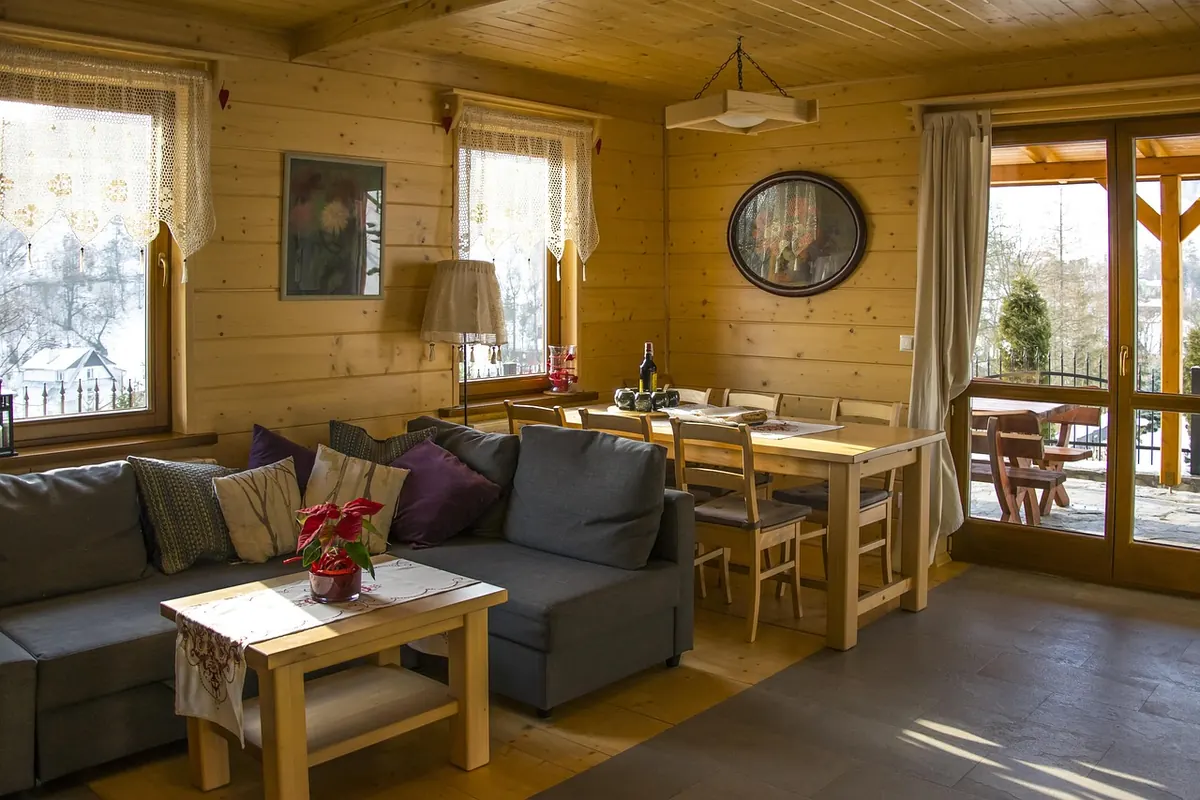
In a small room you are standing two or three metres from the window, not across a hall. That changes what a pattern does. A large repeat gets cut mid-motif on a narrow panel, so the curtain looks like a section of something bigger rather than a finished object. A dense small print, on the other hand, reads as texture from a distance and adds warmth without adding visual clutter.
Tone-on-tone patterns, subtle weaves and small geometrics are forgiving. If you want verticality, look for narrow stripes, long slim motifs or a fabric with a visible slub running up the length. Avoid horizontal banding, contrast borders along the hem and wide horizontal stripes: they cut the height you just worked to create.
One rule saves a lot of grief. If the walls already carry a pattern, keep the curtains plain. If the curtains are patterned, keep the walls quiet. Two competing patterns in a small room will always look busier than either would alone.
Use Colour to Push the Walls Back
A curtain close to the wall colour makes the wall recede, and the room feels wider. The window edge becomes the only line your eye registers, and the whole surface reads as one calm plane. This is why pale curtains against pale walls look effortless and why the same curtains against a deep accent wall can look like a mistake.
Contrast does the opposite. A dark curtain on a light wall becomes a vertical slab and visually narrows the room. If you want contrast, keep it gentle — ecru against white, soft grey against off-white, a muted sage against cream. Save strong colour for a cushion, a lampshade or a single chair, where it costs you no light.
Also look at the hem. Floor-length curtains, finishing just at the floor or a centimetre above it, add height. Sill-length curtains cut the wall in half and make a low room feel lower. Avoid puddling in a small space; a clean hem is calmer and easier to keep tidy.
Alternatives Worth Considering When Wall Space Is Precious
Curtains are not always the right answer, particularly in rooms where every centimetre of wall is in use. These options keep light and floor space:
- Roman blinds mounted inside the recess or just above it. They stack into a neat band at the top and free the wall on either side. Choose a light fabric and a lining that filters rather than blocks.
- Café curtains covering only the lower half of the window. Useful in kitchens and bathrooms where privacy matters at eye level but daylight matters more.
- A ceiling track with sheers across the whole wall. A soft wall of light that hides an awkward window position and adds height at the same time.
- Simple roller blinds in a tone close to the wall, with a curtain only on one side as a soft edge.
Before You Order: A Short Checklist
- Measure the intended rod width, not the window width, then multiply by two for total panel width.
- Decide the finished length first — floor-length or just above — and check it against your ceiling height.
- Hold a fabric sample against the wall in daylight, morning and evening if you can.
- Confirm the lining colour and whether the fabric is sold with or without it.
- Check the rod's projection so the panels clear the sill, a radiator or a deep reveal.
- Picture where the fabric will sit when the curtains are open: it should cover wall, not glass.
None of this requires a bigger budget, only a different order of decisions. Hang high, keep the fabric light, choose a pattern that survives being seen up close, and let the colour agree with the wall. The room will do the rest.
Photo: Max Vakhtbovych / Pexels