

A Seasonal Curtain and Lighting Refresh Checklist for Autumn
A Seasonal Curtain and Lighting Refresh Checklist for Autumn
Autumn arrives at the window first. The light drops lower, shadows stretch across the floor, and the lamps that went unnoticed in July become the anchors of a room. A seasonal refresh does not require a new scheme. It requires editing: closing the gap between summer sheers and winter weight, replacing harsh bulbs with warmer ones, and giving light somewhere to land. Work through this checklist in an afternoon or spread it across a weekend. The aim is a home that feels considered at 5 p.m., when the daylight has gone blue and the kettle is on.
Begin With a Ten-Minute Light Audit
Before you move furniture or buy a single bulb, watch how light behaves in your rooms. On a clear morning, note where sun lands and which corners stay dim. Repeat at dusk. Which lamp glares into the sofa? Which hallway needs a hand to find the switch? Take a few phone photos at different times; they will reveal patterns you stop noticing when you live with them.
Look for four things:
- Glare from a bare bulb, a shiny shade, or a lamp placed at eye level opposite a chair.
- Dark corners behind doors, beside wardrobes, and at the ends of corridors.
- Cold pools of blue-white light from an unshaded ceiling fixture, especially in kitchens and hallways where the light should feel crisp but not clinical.
- Dead zones where no lamp is within reach of a chair, bed, or sofa, so you have to get up to switch on a light.
Make a note of the times you use each room, not just how it looks at noon. A west-facing sitting room may be bright at 3 p.m. and gloomy by 5.30 p.m.; a north-facing hall may never receive direct sun and rely entirely on electric light. The audit is not about finding fault. It is about matching the room’s light to the way you actually live in it, especially on the darker evenings ahead.
Curtains First, Then Lighting
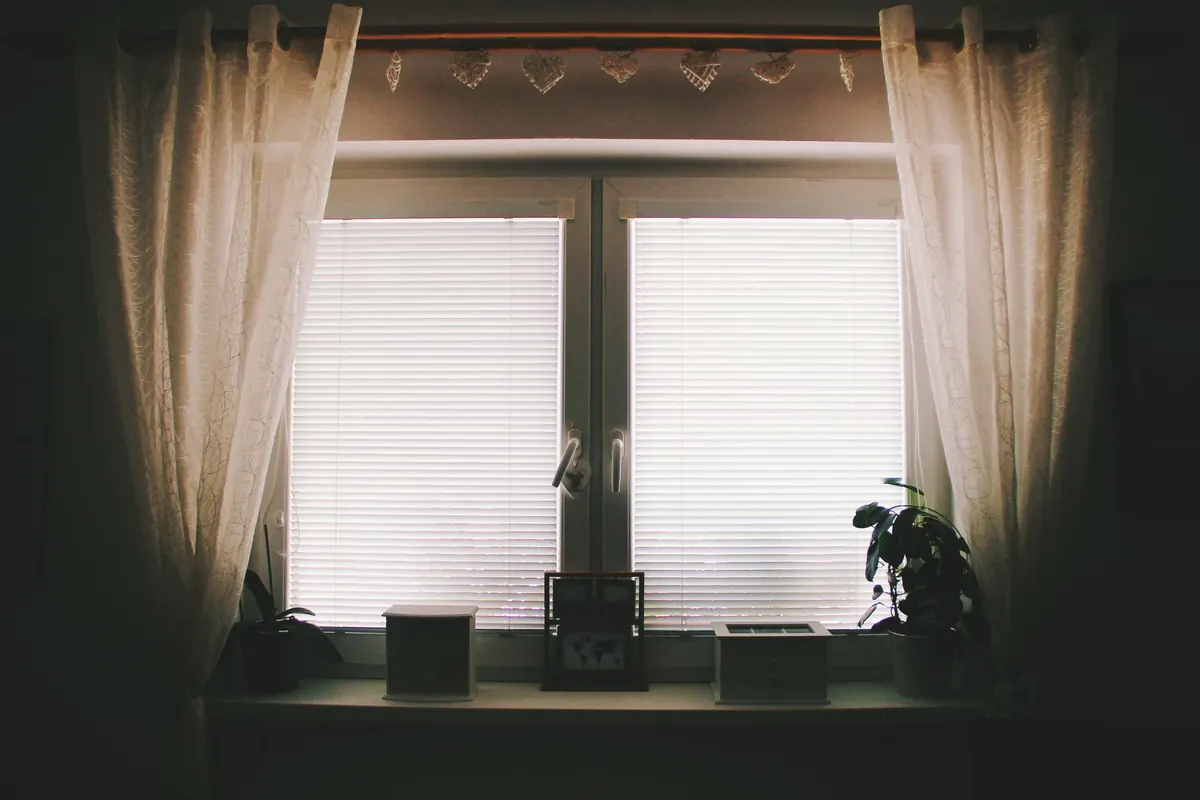
Curtains set the tone because they control the raw material: daylight. Before buying anything, take down summer sheers and look at the window honestly. Is there a gap at the top where light spills over the rail? Does the curtain stop short of the floor, leaving a bright stripe beneath it? Are the hooks tired, the lining thin, or the fabric too light to soften a low autumn sun? Small fixes here often do more than another lamp.
Close the Seasonal Gap
If you use two sets of curtains, treat them as layers rather than a permanent change. A light linen or cotton curtain can stay up through mild days, with a heavier wool, velvet, or lined curtain pulled across at dusk. If one pair must do everything, choose a medium-weight fabric with a lining that filters light and keeps warmth in. In bedrooms, blackout lining earns its keep as mornings grow darker; in living rooms, a lighter lining preserves the view while taking the edge off a cold window.
- Day layer: linen, cotton, or a fine weave that lets some light through without turning the room into a stage set.
- Evening layer: wool, velvet, or a lined curtain that closes the room in and makes lamplight feel warmer by contrast.
- Lining: thermal or blackout where draughts and early sun are a problem; plain cotton where you want softness without heaviness.
- Hardware: check rings, hooks, and brackets. A curtain that sticks or sags will never hang well, however good the fabric.
Example: a bay window in a dining room may need a short café curtain during the day and full-length curtains at night. A narrow hallway may only need a half-curtain over the glass panel, but that small piece of fabric can stop the space feeling like a corridor to somewhere else.
Check Length, Hang, and Heat
Autumn is the moment to notice practical details. Curtains hanging over a radiator trap heat; shorten them or choose a sill-length pair so warm air can circulate. Curtains that pool on the floor look generous but collect dust and damp; a small break, just touching the floor, is easier to live with. Check that curtains clear doorways and don’t catch on handles. Adjust the pole height if the curtains look mean or the window looks smaller than it is. Hanging the pole closer to the ceiling and wider than the window can make a modest room feel more composed before you even change a bulb.
Lighting: Warmth, Layers, and Useful Contrast
Once the curtains are in order, turn to the bulbs. The goal is not to make every room look the same. It is to make each room feel finished at the hour you use it most. Start by matching colour temperature. Warm-white bulbs around 2700K suit living rooms and bedrooms; slightly cooler 3000K bulbs can work in kitchens, studies, and hallways where tasks need clarity. Avoid mixing very yellow and very blue bulbs in one sightline, because the eye reads the mismatch as untidiness even when it cannot name the cause.
Three Layers Are Usually Enough
- Ambient light gives the room its general wash: a ceiling fixture, a pendant, or an uplighter. Keep it dimmable where possible so it can drop from useful to gentle as the evening goes on.
- Task light does the close work: a reading lamp beside a chair, a slim lamp on a desk, a pendant over a kitchen counter. It should fall where your hands and eyes are, not over your shoulder.
- Accent light gives the eye somewhere to rest: a small lamp on a shelf, a picture light, a low lamp in a corner. This is the layer that makes a room feel warm rather than merely illuminated.
Example: a living room lit only by a central pendant can feel flat and slightly institutional. Add a floor lamp beside the sofa, a table lamp on a sideboard, and a dimmable bulb in the pendant, and the same room gains depth. The shadows are part of the effect. You are not trying to abolish them.
Put Light Where It Is Useful
Check the height of lampshades. When seated, the bottom of a shade should sit around eye level so you see the light without seeing the bulb. A lamp placed behind the sofa may light the wall beautifully but leave your book in shadow. A lamp opposite a chair may solve the dark corner and create glare. Move the lamp before you replace it. Dark hallways often benefit from a low-level night light or a battery-operated puck light near the switch; these small additions are especially useful as the evenings draw in.
A Room-by-Room Autumn Edit
Use this quick pass to keep the refresh practical. Work through one room at a time and carry a notebook or your phone with you.
- Living room: check for glare from a lamp opposite the sofa, add a warm task lamp beside the main chair, and make sure curtains can close without trapping heat over a radiator.
- Bedroom: prioritise blackout or lined curtains if early light wakes you, and replace a harsh ceiling bulb with a dimmable warm bulb or two bedside lamps.
- Hallway and stairs: look for the switch you cannot find in the dark, add a low-level light near the door, and make sure the bulb colour matches the room you are walking into.
- Kitchen and dining: keep task light crisp over worktops, but warm the dining table with a pendant or a pair of low lamps so evening meals do not feel like a canteen.
This room-by-room method prevents the common mistake of buying one new lamp and putting it wherever there is a free socket. Light should answer a need: reading, cooking, finding the door, or simply making a corner feel less bare.
Small Changes That Make a Big Difference
Before you buy new shades or curtains, try the free adjustments. Clean dusty bulbs and lampshades; dust can dull light surprisingly quickly. Move a lamp a metre to the left or right. Swap a cool bulb for a warm one from another room. Put a mirror opposite a window to bounce late afternoon light into a dark hallway. Use a timer or smart plug so a lamp is already on when you come home, rather than entering a room that feels closed for the night.
Aim for pools of light and areas of soft shadow, not an even wash from corner to corner. The eye needs contrast to feel at ease.
If you do buy, keep it simple: one warm dimmable bulb for every lamp you use most, a lined curtain for the coldest window, and a small task light for the chair where you actually sit. These are the changes you will notice every evening, long after the novelty of a new cushion has faded.
A Simple Weekend Plan
Spread the work across two days so you can see the difference each change makes. Autumn rewards small, deliberate edits more than a rushed overhaul.
- Saturday morning: do the light audit, take photos, and note glare, dark corners, and dead zones.
- Saturday afternoon: wash windows, check curtain hardware, and rehang curtains at the right height and length.
- Saturday evening: test bulbs at dusk. Swap the worst offenders for warm, dimmable options and move one lamp that is not earning its place.
- Sunday morning: add one task light and one low accent light to the room you use most.
- Sunday evening: close the curtains, switch on only the lamps you need, and sit for ten minutes. Adjust what feels harsh, dim what feels flat, and stop when the room feels settled.
By the end of the weekend, the house should not look entirely new. It should feel more like itself: warmer at the edges, easier to move through, and ready for the early dark. That is the point of a seasonal refresh. It is not a race towards a different home. It is a quiet adjustment that lets the home you already have meet the season properly.
Photo: 3816690 / Pixabay